Thinking about changing SIL Providers?
We make it easy.
Looking to change your Supported Independent Living (SIL) provider?
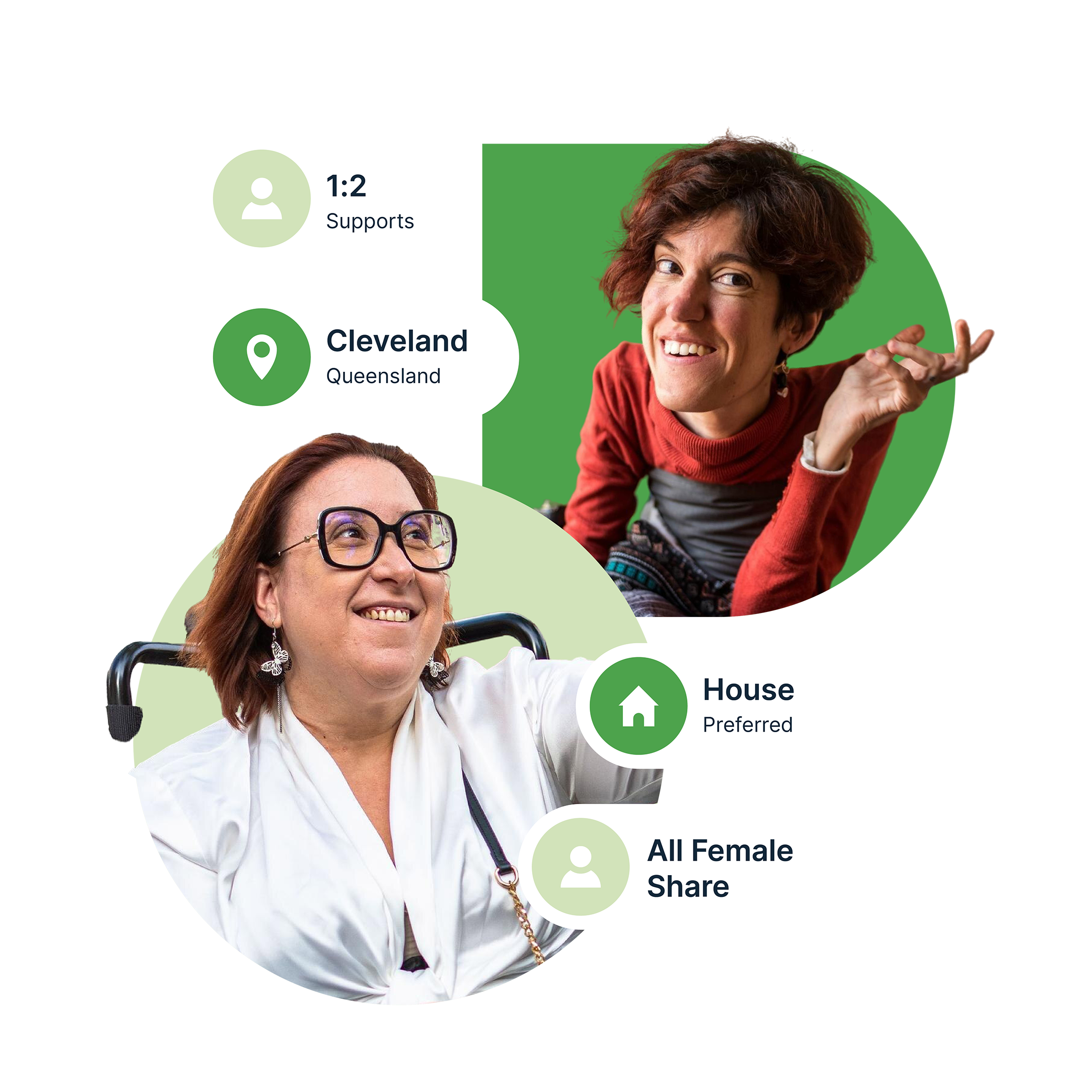
We’ll match you with the right home, housemates, and support team to help you thrive. It’s disability done differently.
Move with confidence.
Is your SIL provider NDIS registered?
From 1 July, it’s a legal requirement.
For Care offers trusted, experienced NDIS-registered support. Talk to us today.
We make changing SIL providers simple
Changing your SIL provider is easier than you might think – especially with the right support.
Get in touch with our team
Reach out for a friendly,
no-obligation chat about your current situation and what you’re looking for to live life the way you want.
Together we’ll create a plan
We take the time to understand
your needs and preferences,
routines and goals, so we can find you the right home, the right housemates, and the right support team.
We’ll make your move seamless
We’ll help you with a smooth transition from your current provider, so you can enjoy continuity of care and minimal disruption.
Settle in to your new home
We’ll help you feel right at home from day one – settling into your new space, finding your rhythm with housemates and building connections with your local community.

A Different Approach to Supported Independent Living
Most SIL providers start with the home. We start with you.
What matters to you, matters to us.
At For Care, we take the time to understand your needs, preferences, and personality – then carefully match you with the right home, the right housemates, and the right support team.
Thoughtful matching. Better outcomes.
Because the right fit changes everything.
How we help
Changing your NDIS provider doesn’t have to be stressful.
We support you from our first conversation, through to move-in day, and beyond with
- Managing the transition process
- Coordinating communication between providers
- Minimising disruption to your routine
- Ensuring continuity of care
- Communicating with your existing allied health providers, or our fully vetted partners.
- Guiding you every step of the way.
Supported Independent Living Homes in Your Region
Our team can help you find the right fit.
We provide high-quality SIL homes across the Redlands, Bayside Brisbane, Logan, Ipswich and Toowoomba.

Ready to Change Your SIL Provider?
With almost two decades in disability support, For Care has helped hundreds of people find a better quality of life.
We make changing Supported Independent Living providers simple, with personalised matching and seamless transitions.
And because we’re local, you can rely on responsive service, a wide, trusted network of connected services, and people who genuinely understand you.
NDIS Registered. Transition expertise. Ready to welcome you.
Find Your Perfect Match With Us
If your current NDIS SIL provider isn’t continuing services,
or you’re ready to explore better options –
we’re here to help.
What the right SIL home feels like for you
- An approach that builds confidence, supports independence, and helps you live life on your terms.
- Support that grows with you whether it’s your first time living away from home, or part of your journey towards greater independence.
- A safe and comfortable home with spaces designed to promote wellbeing, connection and quality of life.
- Thoughtfully matched supports matching with consistent, experienced staff who understand your goals, preferences, and support needs.
- Opportunities to build everyday life skills, create meaningful routines, and gain confidence in daily living and community access.
- Genuine connections with housemates, helping you feel included, supported, and a sense of belonging.
- Choice and control over your routines, goals, and lifestyle with support that encourages personal growth and your individuality.
What the right SIL home feels like for your family
- Consistent, reliable and experienced support staff – many with lived experience supporting a loved one with disability.
- Clear communication and collaboration with families, guardians and support networks through regular updates, stakeholder meetings, and open conversations to ensure holistic care and everyone stays informed, connected and heard.
- Flexible and responsive support that adapts as needs change prioritising your loved one’s goals, wellbeing, and independence, including advocacy for funding changes, and securing the right supports.
- Peace of mind knowing your loved one is safe, happy, supported, and genuinely cared for.
- Confidence that your loved one is living in an environment where they feel respected, valued, included, and supported to live a meaningful and fulfilling life.
Frequently Asked Questions
What is changing for SIL from 1 July 2026?
The Australian Government is introducing mandatory NDIS registration for all Supported Independent Living (SIL) providers. This means that after 1 July 2026, providers who are not registered with the NDIS Quality and Safeguards Commission can no longer legally deliver SIL services or receive NDIS funding for them.
Previously, SIL could be delivered by both registered and unregistered providers. This is no longer the case after the deadline.
How do I know if my provider is registered?
You can ask your provider directly or search the NDIS Provider Register on the NDIS Quality and Safeguards Commission website. Simply search by provider name and look for registration that covers Supported Independent Living.
Do I need to give notice if I want to change providers?
In most cases, yes. Your SIL arrangement is governed by a service agreement, which typically includes a notice period – commonly 2 to 4 weeks, though some providers may require more (up to 6 or even 8 weeks).
Even if your provider is unregistered, you are generally expected to follow the terms of your service agreement. There is currently no blanket rule that allows immediate exit simply because a provider is unregistered.
This is why starting early is so important – the more time you have, the more smoothly a transition can be managed.
My provider said they are “preparing to register” – is that OK?
Providers who are actively working toward registration may be able to continue operating during the transition period leading up to 1 July 2026. However, once mandatory registration is fully enforced, only fully registered providers will be permitted to deliver SIL.
“Preparing to register” is not a permanent solution. If your provider is mid-process, the key questions to ask are: What is their expected registration date? What happens if they don’t achieve it in time? What is their contingency plan for your support?
How long does a SIL transition typically take?
Review your service agreement to understand your notice period, exit terms, and any conditions around transitioning. This sets the clock on when you need to act.
A well-managed SIL transition typically requires at least 6 weeks – sometimes more – to allow time to find the right home, manage your current notice period, complete documentation, and ensure a smooth handover of care.
With the July 2026 deadline approaching, the window for a comfortable, well-planned transition is narrowing. Transitions that are rushed may result in placements that aren’t the perfect fit, which can mean another disruption down the track.
Will there be enough SIL providers to choose from?
In the short to medium term there is likely to be some reduction in available providers. Registration involves audits, compliance systems, and costs that some smaller or newer providers may choose not to undertake.
The more lead time you have, the more choice you’ll have. Rushed transitions mean less ability to find the right fit – in terms of location, environment, culture, and care.
What if I’m in a regional or rural area?
Regional participants may face additional challenges, as provider density is lower and choice may reduce more significantly in some areas. This makes early planning even more critical for people outside major cities.
Speak with your support coordinator as early as possible to understand what registered options exist in your area, and whether you may need to consider different arrangements.
I don’t have a support coordinator, what should I do?
If you don’t currently have a support coordinator, you may be able to access one through your NDIS plan if you have Support Coordination funding. Alternatively, Local Area Coordinators (LACs) can also assist with understanding your options.